
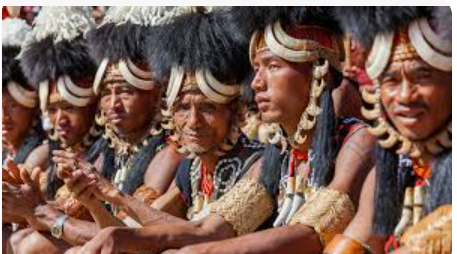
On the occasion of International Indigenous Peoples Day (9 August)
The condition and direction of the tribals at the international and all India level
– Tuhin
Introduction – The United Nations General Assembly declared 9 August as the International Day for the Indigenous Peoples of the World in December 1994. It was decided that during the International Indigenous Decade between 1995-2004, 9 August would be celebrated as International Indigenous Day every year. In 2004, the General Assembly declared the second International Indigenous Decade between 2005-2015 as a “decade of work and importance”. According to the United Nations estimates, about 370 million indigenous people (tribals) live in 70 countries of the world. And this is a little less than 6 percent of the total population of the world and belongs to 5000 different branches in 72 countries. The ancient civilizations of the world were created by the indigenous people. Some of these were highly developed like the Maya, Inca and Azteca civilizations of Mexico, Peru and South and Central America and there are also such communities which keep themselves aloof from any kind of external influence like the Sentinelese and Jarawa communities of the Andaman Islands. Many communities of indigenous people have become extinct from this earth, many groups are on the verge of extinction and many groups are going through various processes of change.
Victims of the cruelty of colonialism – When European colonialism began to gain a foothold in the whole world in the Middle Ages, a mountain of sorrows fell on the indigenous people of Asia, Africa, South America and Australia. After the discovery of America by Christopher Columbus, European colonial powers, especially Spain, Portugal, Holland (Dutch), Britain, Denmark, France, Belgium etc., forcibly took ships full of African indigenous people from the African continent to America in the name of populating the American continent. European colonial powers burned down villages in Africa and forcibly took the people of Africa (where the light of the first human civilization spread on earth) to North and South America and enslaved them. European colonialism flourished by the slave trade of the natives of Africa. The people who nurtured and populated America with their blood and sweat, even today those African-Americans are second class citizens in America and are the biggest victims of the racist apartheid policy. Even though slavery has been abolished legally in America, they are still the poorest, most miserable, unemployed, victims of violence, deprived of human rights and are imprisoned in the largest numbers there.
On the one hand, slavery was imposed on the natives of Africa in North America and inhuman exploitation was done, while on the other hand, the Red Indian community of the natives of South America (Latin America) like Maya, Inca, Azteca etc. were completely destroyed. In Peru, the cruel Spanish commander Pizarro brutally murdered countless tribals including the tribal king Atahualpa in greed for gold treasure. It is said that European civilization in South America has flourished on the foundation of the blood and flesh of the Red Indian natives. In South America, apart from France’s domination over Haiti and Portugal’s domination over Brazil, the entire continent remained under the control of Spanish colonialism. Similarly, Britain, Germany, Italy, Belgium and France colonized Africa, while Britain, France, Portugal, America and Holland colonized various Asian countries. In Australia, after Captain Cook discovered the continent, British colonialism laid the foundation of European civilization by exterminating the natives there and settling all the tainted criminals of Britain in Australia. The resistance struggle of the people of the colonies, especially the indigenous people/tribals, continued against first colonialism and then imperialism, the highest form of capitalism.
After the Second World War, the imperialists, seeing the intensity of the people’s liberation struggle in the colonies and their own time of crisis, adopted a new strategy to loot the world. Due to the weakening of British imperialism after the Second World War, all the imperialist powers considered America, the new imperialist power that suffered the least loss in the world war, as their leader. Therefore, under the leadership of America, all the imperialist powers started adopting the neo-colonial strategy of indirect control instead of direct control, instead of the old type of colonialism. Under this, the imperialists in Asia, Africa and South America declared formal independence in their old colonies after 1945 for show and by handing over power to their stooges (who were the indigenous agents of the imperialists, capitalists and feudal landowners), started controlling and interfering in the politics, economics, strategic policy etc. of the neo-colonies from behind the scenes. Under their neo-colonial policy, the imperialist powers no longer need to occupy poor, backward or developing countries through forceful military intervention or invasion (as is done by the US in Iraq, Afghanistan or other countries), but they hollow out the above-mentioned countries by looting them through the World Bank, International Monetary Fund (IMF), World Trade Organization (WTO) and Multinational Corporations (MNCs).
Resistance of Indigenous Peoples – Against this new slavery, the struggle of all the oppressed people including the indigenous people for their rights on water, forest and land, for true freedom and for the establishment of an egalitarian society against the neo-colonial ruling classes by exposing the deception of the so-called colonial-free world after the Second World War is continuing in Asia, Africa and South America. We get a glimpse of this in the country of Bolivia where the indigenous people staged a massive movement against the indiscriminate exploitation and commercialization of underground water by a multinational company in an area called Cochabamba. Evo Morales was one of them and was the leader of the indigenous people in that movement. Later, due to the influence of that movement, Evo Morales won the general elections and became the President of Bolivia. After becoming the President, he first gave the gift of May Day to his countrymen by nationalizing all the multinational petroleum companies on the occasion of International Labor Day on 1 May 2006. Due to this, he had to face strong opposition from America and multinational companies. But this did not change his decision. He and many heads of state of South America, including the late President of Venezuela, Hugo Chavez, together have continued to try to maintain the control of the local people on the natural resources of their country and to maintain the sovereignty of their respective countries despite facing strong pressure from the imperialists (called developed countries) / multinational companies. On one side are they and on the other side are we who see the rulers of our country who, in the name of ‘Make in India’, are hell-bent on looting all the resources including the natural wealth of the country at the hands of the imperialists and putting the sovereignty of the country at stake.
Tribals in India – According to the 2011 census (because since then the fascist Modi government has not conducted the census conducted every ten years to stop caste census), tribals constitute 8.6 percent or 104 million of India’s population. In India, tribals/indigenous communities reside in various states, especially in Chhattisgarh, Jharkhand, Bihar, Andhra Pradesh, Odisha, Rajasthan, Tamil Nadu, Gujarat, West Bengal and the northeastern states and Andaman and Nicobar. According to government data, there are 757 Scheduled Tribe community people residing in different states across the country. Before the Aryan invasion in India, the indigenous tribal and Dravidian communities were the originators of the country’s ancient civilization and culture. The world-famous urban civilization of Mohenjodaro and Harappa is also included in this. In the feudal era, from the Maurya period to the Sultanate period and before the British rule, the tribal society was able to maintain its rights over water, forest and land to a large extent. But the British rule in India took root after the victory in the Battle of Plassey in 1757. After the Battle of Plassey, the wealth of India was diverted to Britain like a rainy river. This wealth helped a lot in completing the industrial revolution in Britain. Steam engines, powerlooms and machines for mass production of goods were invented. After the completion of the industrial revolution, the problem of market arose in front of the British industrialists. They needed a market to sell the goods of their factories. They had their eyes on the huge market of India. For the profit of the British industrialists, it was necessary to destroy the industries of India and make it a purely agricultural country. In this interest, in 1793, Governor-General Lord Cornwallis took a new step to ruin the farmers by making ‘Permanent Settlement of Land’. Due to this settlement, the ownership rights of the farmers on the land were lost and a new landlord class came into existence, which became the owner of their land without giving any kind of compensation to the farmers. By creating this landlord class, the British merchants created the social base of their government. These new landlords became the pillars of British rule. The ‘Permanent Settlement Act’ had the worst effect on the indigenous tribals of the country and their anger against the British rule and their indigenous agents, the landowners and moneylenders, continued to erupt for the next two hundred years, even after 1947. On 18 September 1798, Lord Cornwallis sent a report to England, ‘I can say with pride that one-third of the Company’s (East India Company) land in Hindustan has now become a forest, inhabited only by wild animals.’ British imperialism and its indigenous agents not only snatched the tribals’ right to water, forest and land, but also tried to make them serfs on their own land by snatching their freedom from them, which continues in various forms even today.
Resistance struggle of the indigenous people/farmers of India –
It can be said with authority that the glorious and major part of India’s freedom struggle against British rule in the eighteenth, nineteenth and twentieth centuries was the continuous rebellion of the indigenous people or tribals. But the British imperialists and many Indian historians, who were its stooges, did not give the great role of the tribals the place they deserved in history or school textbooks, under the influence of colonialism. Rather, they promoted the leaders of the elite class, who were pampered and nurtured by British imperialism, as freedom fighters. They were the people of the ruling class, who never took the fight against the British to a decisive stage, and never made any major sacrifice. It was because of their compromising attitude that the British handed over the power of the country to these so-called freedom fighters as a reward in 1947.
The British imperialists and their servant historians tried to cover up these glorious struggles of the Indian people to the best of their ability. They left no stone unturned to defame the tribal heroes who tried to drive the imperialists out of India by calling them dacoits, robbers, murderers etc. In their view, people like Clive, Warren Hastings, Dalhousie, who strengthened the foundation of the British Empire in India by adopting the path of deceit, treachery, open loot and robbery, were great, but Veer Narayan Singh, Gundadhur, Majnu Shah, Titumir, Tirath Singh, Velu Thampi, Sidhu-Kanu-Chand-Bhairav, Ram Singh Kuka, Tikendrajit, Tilka Manjhi, Birsa Munda etc. who led the fight against their loot and plunder were criminals and deserved to be punished. It is the responsibility of historians and true patriotic intellectuals to tear apart this veil of lies, slander and bad propaganda. Brief description of selected rebellions –
1. Sanyasi Rebellion (1763-1800) – This rebellion in Bengal and Bihar marked the beginning of the rebellion against colonial rule.
2. Medinipur Rebellion (1766-67) – The tribal communities named Khaira and Manjhi of Medinipur district of Bengal were the main force of this rebellion.
3. Dhalbhum Rebellion (1766-77) – The rebellion of the natives took place in Dhalbhum of Bengal.
4. Moamaria Rebellion (1769-99) – The rebellion of the Moamaria sect of North Assam.
5. Chakma Rebellion (1776-89) – The Chakmas, a hill tribe of Chittagong in East Bengal (now Bangladesh), revolted.
6. Paharia Rebellion (1788-90) – This rebellion took place in the then Birbhum-Bankura district of Bengal.
7. Chuad Rebellion (1798-99) – The Chuad tribals revolted in the south-west of Bankura district and the north-west part of Medinipur district. This revolt troubled the feudal lords-landlords-Britishers so much that the word Chuad started being used as an abuse in Bengali (which is used for bad and lowly).
8. Travancore’s War of Independence (1808-09) – The rebellion of the natives took place in Travancore of Kerala under the leadership of Velu Thampi, the leader of the anti-British rebellion.
9. Bhil Rebellion (1818-1831) – The region from Vindhyachal in the north to Sahyadri or Pachchimi Ghat in the south-west has been the old abode of the Bhils. Their rebellion is famous.
10. Ho tribal front (1820-21) – The Ho tribes revolted in Singhbhum district of Chhota Nagpur (now Jharkhand).
11. Mer rebellion of Rajasthan (1820)
12. Pagalpanthi rebellion (1825-33) – This rebellion was the rebellion of Garo and Hajang tribes of Mymensingh district of Bengal.
13. Gadhdhar Singh’s rebellion (1828-30) – The first rebellion of Brahmaputra valley in Assam.
14. Khasia rebellion (1829-33) – Revolt of the militant Khasi tribes in Assam. 15. Singpho Rebellion (1830-31) – Singpho tribals living on both sides of Assam and Burma border revolted.
16. Rebellion of Aka tribals of Assam (1829-38)
17. Kol Rebellion of Chotanagpur (1831-32)
18. Front of Coorgis of Karnataka (1833-34)
19. Gond Rebellion (1833) – Strong resistance of Gond tribals of Sambalpur region of Madhya Pradesh now Odisha.
20. Khamti rebellion of Assam-Burma border region (1839)
21. Surendra Sai’s rebellion (1839-62) – Even after the Gond rebellion (1833) in Sambalpur region, Surendra Sai continued to organize tribals and other exploited farmers against the British and raised the flag of rebellion during the great rebellion of 1857.
22. Rebellion of Kolis of Maharashtra (1839-50)
23. Bundela Rebellion of Gond tribals in Sagar, Damoh and Jabalpur of Bundelkhand of Madhya Pradesh (1842)
24. Khond Rebellion of Orissa (1846)
25. Rebellion of Garo people of Assam (1848-66)
26. Rebellion of Abors of Assam (1848-1900)
27. Rebellion of Lushais living in Lushai Hills of Assam (1849-92)
28. Front of Nagas of Nagaland (1849-78)
29. Santhal Rebellion (1855-56) – The Great Santhal Rebellion is also called ‘Hool’. In Chhotanagpur region/Bihar/Bengal, first Amar Shaheed Baba Tilka Manjhi and then the famous Santhal rebellion took place under the leadership of four brothers named Sidhu-Kanu-Chand-Bhairav. Which shook the foundations of the British in Jharkhand. The battle of ‘Bhagnadihi’ is very famous in the Santhal rebellion.
30. In the first freedom struggle/great rebellion of 1857, the indigenous people played a big role in the entire country. Especially in Jharkhand, Bihar, Bengal, Assam, Madhya Pradesh, Andhra Pradesh and Chhattisgarh.
31. Martyr Veernarayan Singh’s rebellion (1856-57) – The flames of the great rebellion reached Chhattisgarh (then CP & Berar). Veer Narayan Singh of Sonakhan of Raipur district, along with the local farmers who were suffering from famine and hunger, raised the flag of rebellion against the British and the local moneylenders. He was friends with the rebel leader Surendra Sai of Sambalpur. After the fierce battle of Kurupaat Dongri, Narayan Singh was caught and hanged in Raipur on 10 December 1857. At the same time, Magazine Lashkar Hanuman Singh led the rebellion of Indian soldiers under the British Army in Raipur. Seventeen Indian soldiers were martyred in this rebellion (all belonged to the 3rd Regiment). 32. Indigo Rebellion of Bengal, Bihar (1860-61)
33. Rebellion of Jaintia Hills region of Assam (1860-63)
34. Kuki Rebellion of Tripura, Chittagong (1860-90)
35. Many rebellions in Assam (1861-94)
36. Kooka Rebellion led by Ram Singh Kooka in Punjab (1869-72)
37. Peasant Rebellion of Pabna in Bengal (1872-73)
38. Rampa Rebellion of Godavari district in Andhra Pradesh (1879-80)
39. Tikendrajit’s Rebellion and Martyrdom in Manipur (1891)
40. Birsa Rebellion (1899-1900) – Birsa Rebellion was actually a rebellion led by Birsa Munda. The tribals deprived of water, forest and land due to the Chotanagpur/Santhalpargana Tenancy Act of the British were very angry with the locals, landlords/moneylenders and the British Raj. This famous rebellion is also called ‘Ulgulan’. After the suppression of the rebellion, Birsa, imprisoned in Ranchi jail, died on 9 June 1900. 3 Birsa followers were given death sentence, 44 were given Kala Pani in Andaman Nicobar and 47 were given severe punishment by the British to ruthlessly suppress the rebellion.
Contribution of Bastar of Chhattisgarh in the anti-colonial struggle –
It is very important that we remember the series of fierce wars that the tribals of Bastar fought against the British Raj and feudal lords between 1774 and 1910.
(1) Halba Rebellion (1774-1779)
(2) Bhopalpatnam Struggle (1795) (This was not a rebellion but a false rebellion)
(3) Paralkot Rebellion (1825)
(4) Tarapur Rebellion (1825)
(5) Periya Rebellion (1842-1863)
(6) Great Liberation War (1856-57)
(7) Koi Rebellion (1859)
(8) Mudia Rebellion (1876) – This rebellion is famous in the history of Bastar.
(9) Rani Cho Ris (1878-1882) (This was also not a rebellion but a false rebellion)
(10) Great Bhumkal (1910) – This rebellion led by Gundadhur is famous in the history of the entire Central Province. The rebellion was ruthlessly suppressed by the British Raj with the help of military units from Nagpur and Madras. At present, the struggle of the tribals continues in the neo-colonial system as in the colonial era. Because even today, their rights over water, forest and land have not been established. Nor have they got true freedom or liberation like the common working people of the country. Despite being only 9 percent of the total population of the country, the tribals are being destroyed due to the so-called development projects of successive governments and 56 percent of the total displacement is of tribals. In the current situation, for the last ten years, the rule of the Sanghi Manuwadi / Brahminist fascist forces of the enemy corporate houses of the people, the tribals, Dalits / oppressed backward, women, minorities and poor working people are facing the most misery. Because according to Manusmriti, the revered text of the fascist RSS / BJP, which is a staunch opponent of democracy, constitution and secularism, tribals, Dalits / oppressed and women have not been given the status of humans. Whether it is in the name of suppressing the so-called Maoism in the anti-people BJP ruled states, especially in Bastar of Chhattisgarh, or in the name of suppressing the ‘Pathalgadi Movement’, an expression of the anguish of the tribals, or whether it is the indiscriminate cutting of Hansdev forest, called the lungs of Chhattisgarh, under the aegis of Modi (Modi and the corrupt corporate Adani), the poor hardworking tribal people have to pay the price of the ‘development’ being carried out on the initiative of big corporate houses like Adani, Ambani, Jindal or Tata. In tribal dominated areas, tribals become the victims of suppression and atrocities like killing of tribals in fake encounters, rape, custodial killings, filling innocent tribals in jails for the corporate loot of natural resources. Whether the Chief Minister is a tribal or the Governor, or even the President is a tribal, ethnic cleansing of tribals is not stopping.
Even today, the largest number of illiterate, uneducated, unemployed, sick, starving, landless, poor farmers, agricultural labourers and those imprisoned and deprived of human rights are the indigenous or tribal people.
In fact, on the occasion of World Indigenous Day, it feels like even today the indigenous people are fighting against the rule of corporate/multinational companies in many countries including India. This means that in the agenda of the fascist Modi government, no matter how many good days they claim, the welfare of the tribals, Dalits, exploited, hardworking people, women, minorities and the oppressed class is nowhere in the priority list. In the agenda of the Bharatiya Janata Party and its government, which represents the corporate rich ruling classes, making the super-rich even richer, increasing their bank balances, their wealth even more and getting full guarantee of the safety of their capital is the priority. Therefore, the indigenous exploited, working class is being marginalized more than ever before. Except for forming a broad common struggling front with other Dalit/oppressed classes, women, poor working people and forces fighting for people’s democracy and fighting for radical changes in the existing exploitative Manuwadi system to build a truly democratic, secular, egalitarian, casteless, rational, scientifically conscious, gender equality based non-exploitative progressive society, there will be no relief from the tragedy of the indigenous/tribal people. And neither will the dream of India of great martyrs like Sidhu, Kanu, Phoolo, Jhunno come true. References-
1. Bharater Swadhinata Sangram: Suprakash Rai (Bengali)
2. India’s Freedom Struggle: Ayodhya Singh
3. History of Bastar: Ram Kumar Behar
4. Chhattisgarh’s first peasant revolt and Veer Narayan Singh’s will: Shankar Guha Niyogi and Hari Thakur
5. Struggle of the indigenous people of Africa and South/Latin America: Red Star magazine and various English, Bengali and Hindi newspapers
Contact – (Author Tuhin is the All India convenor of Revolutionary Cultural Forum Kasam,
Mobile- 095899-57708, 94255-60952
E-mail tuhin_dev@yahoo.com)
